
Finding Warner Robins Residents
Know which fact you need before you start. The Houston and Peach assessor systems tie a parcel to its assessed owner, which is ownership evidence and not a list of occupants. Voter records speak to registration. Court indexes show filed-case parties, and deed indexes land parties. A former address may call for deeds, probate, an obituary, a census year, or a historical directory, since each source has its own purpose and date.
A solid Warner Robins residents directory search narrows a broad name or address to an official identifier, then checks the result in an independent source. Middle initials help. So do spouses, parcel numbers, case numbers, deed citations, and event dates, all of which separate namesakes. Renters may never appear on a parcel card. Neither will other household members. Utility, motor vehicle, and delivery records are not public substitute directories.
- Use city boundaries or county GIS to decide whether the address lies in Houston or Peach County.
- Search that assessor by owner, address, or parcel and note the situs and deed reference.
- Check an authorized voter channel, court index, or business or license record for another dated fact.
- Follow the deed citation through the clerk or GSCCCA when ownership history matters.
- For an unposted city file, contact the department or make a narrow open-records request.
Warner Robins Crosses Counties
Warner Robins is incorporated in both Houston and Peach counties. Most of the developed city lies in Houston. Still, a west-side parcel can fall in Peach. A Warner Robins mailing line settles nothing about jurisdiction. Check an official city-limits map or county GIS before choosing an assessor, deed clerk, tax office, or court. The right county prevents false gaps and same-name mix-ups.
Houston courthouse functions center on Perry, with several services also at the Warner Robins Annex. Peach counters sit in Fort Valley. City permits and council files stay with Warner Robins only when the site sits inside incorporated limits. This two-county rule is the first check in any local directory search.
County first. Confirm the parcel county before interpreting an owner, deed, tax account, or court result.
Warner Robins Records Custodians
Georgia assigns deeds to the Clerk of Superior Court rather than a separately named recorder. Tax assessors keep the parcel and appraisal data. Elections offices hold registration records. Warner Robins City Clerk Mandy Stella keeps city documents and legislative history. The roles complement each other. An assessor does not certify a deed, and City Hall does not hold county land files.
Houston Superior Court Clerk
201 N. Perry Parkway
Perry, GA 31069
478-218-4720
Real Estate Division
Houston Tax Assessors
201 Perry Parkway
Perry, GA 31069
478-218-4750
Houston qPublic
Peach Superior Court Clerk
205 W. Church Street
Fort Valley, GA 31030
478-825-5331 ext. 247
Real Estate Division
Warner Robins City Clerk
700 Watson Boulevard
Warner Robins, GA 31093
478-293-1000
City records
The City Clerk page lays out the local routes. It separates agendas, licensing, tax, and open-records work from county functions.
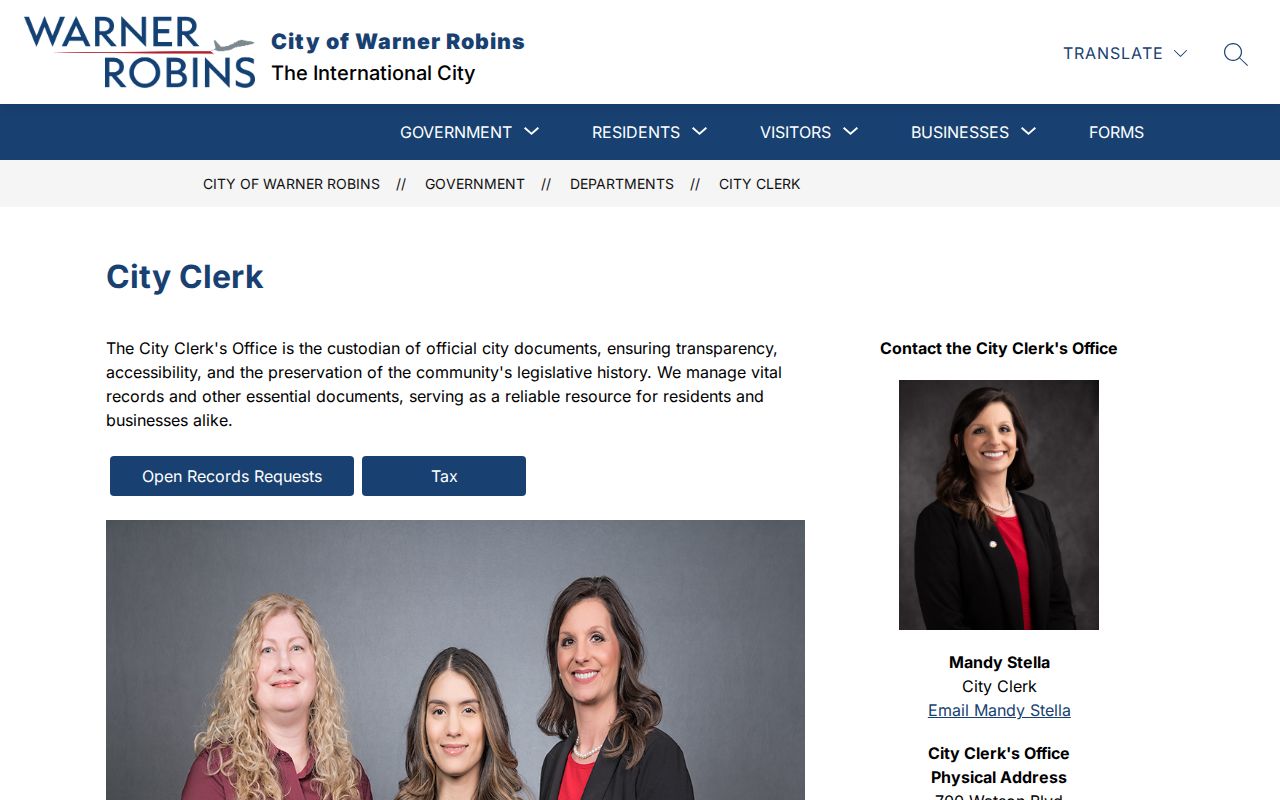
The office page starts a city-file search, not a universal resident roll.
Warner Robins Deed Index
The statewide GSCCCA Real Estate Index covers both counties. Searches run on parties, not street addresses. Start with a current owner as grantee. Open the acquisition deed, identify the grantor, and repeat with an earlier date range. Book and page, instrument number, legal description, land district, land lot, subdivision, and parcel references hold the chain to one property.
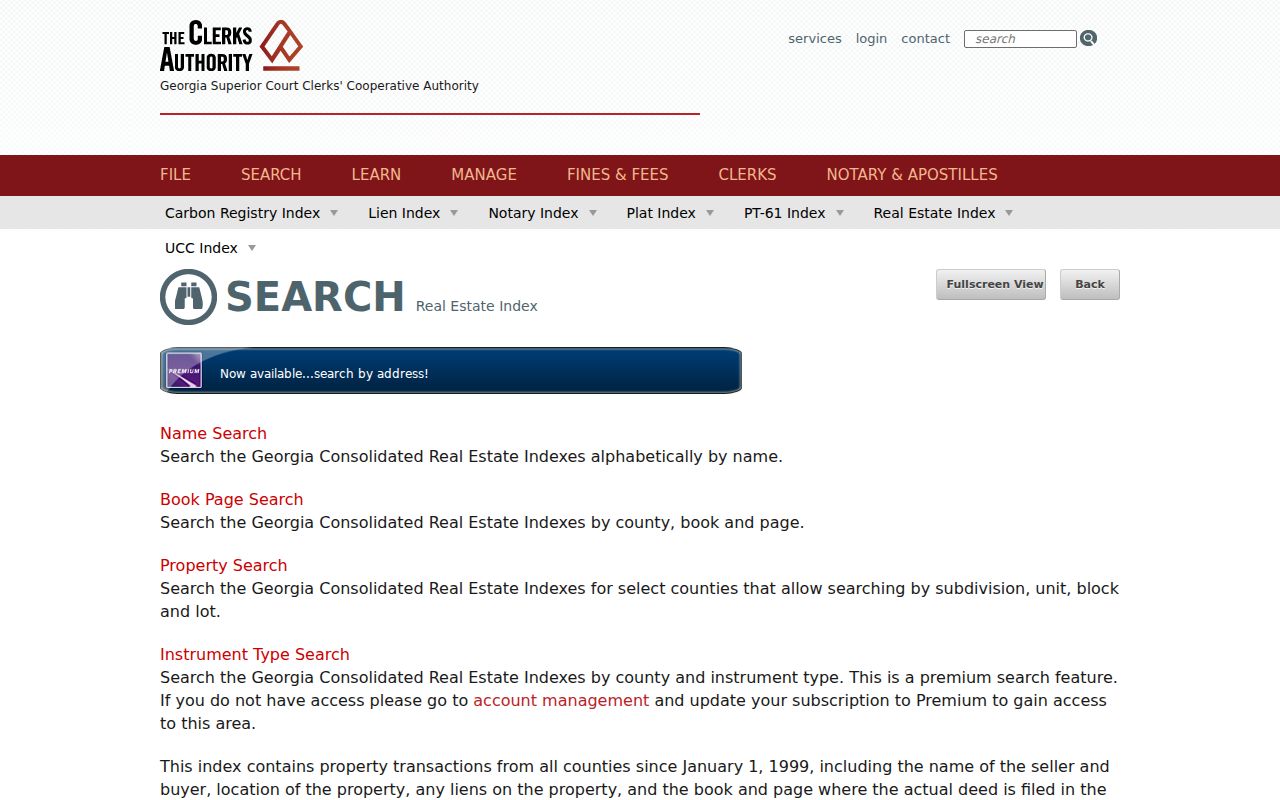
The gateway requires a county and a party role before any name hit can be trusted. The wrong role points to someone else's record.
| Search control | Use in a local deed search |
|---|---|
| County | Choose Houston or Peach |
| Name and party type | Test grantor and grantee roles |
| Instrument type | Limit the document category |
| Date range | Separate common names and periods |
| Book/page or number | Retrieve a cited instrument |
Image access can depend on portal account terms. For old, unclear, or unindexed records, use the clerk counter; the Houston clerk page identifies the official copy route.
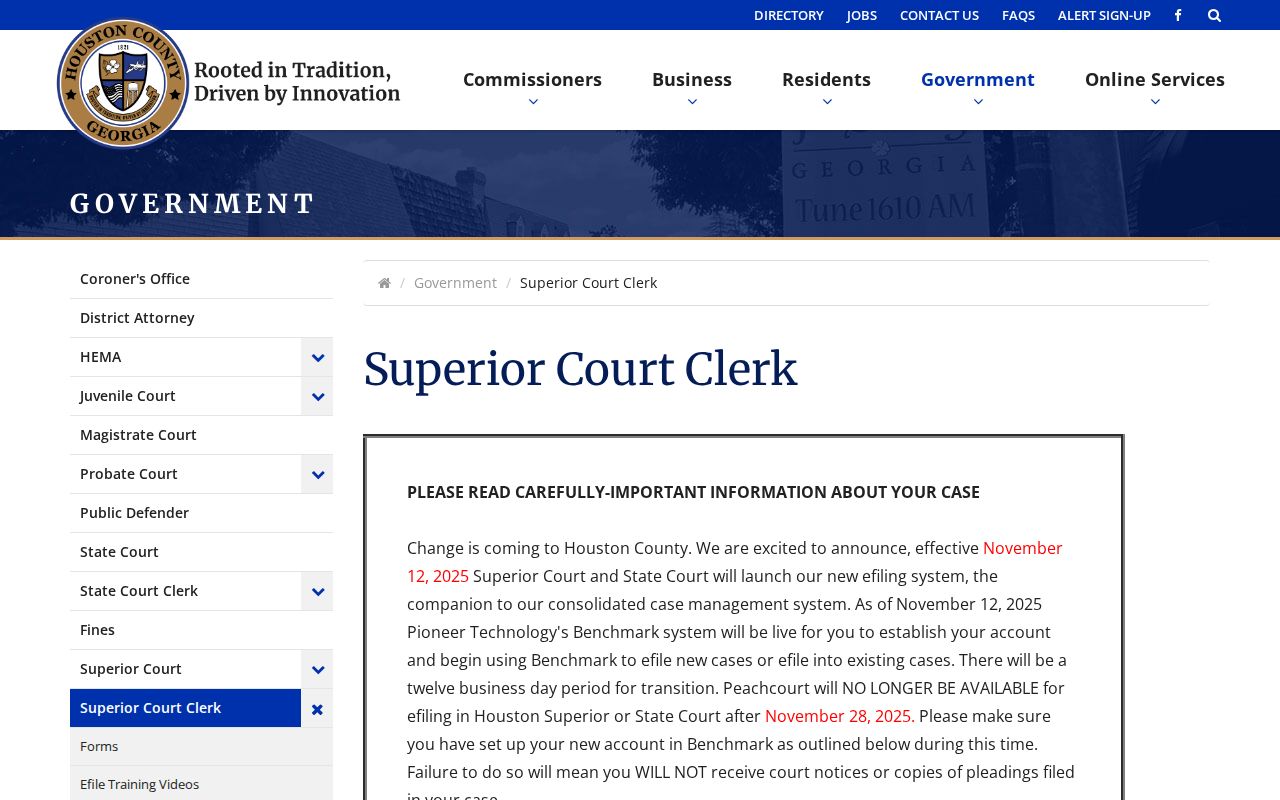
The clerk remains the authority for inspection and certified copies.
Current Warner Robins Directories
Official sources work like narrow resident directories. None lists every household. A parcel roll shows assessed ownership, an elector file covers registration, a deed index records land parties, a case index records court parties, and a city staff directory gives public work contacts. Read each according to its purpose.
| Source | What it confirms | Keeper | Access |
|---|---|---|---|
| Property roll | Owner, situs, mailing and parcel facts | County assessor | qPublic and office |
| Elector records | Information allowed by Georgia law | SOS and county elections | Lookup or list order |
| Deed index | Grantors, grantees and citations | Superior Court Clerk | GSCCCA or counter |
| Court index | Party, case and docket events | Court clerk | Portal or office |
| City staff | Government work contact | Warner Robins | Free city directory |
Commercial compilations blur old and new data. Official rolls are narrower but can be verified. A sound residents directory result pairs two records made for different reasons and keeps both dates.
Warner Robins Voter Records
Georgia's My Voter Page confirms a single voter. It is not a public street roster. The tool matches personal identity details to registration and polling information. Public elector lists are governed by O.C.G.A. § 21-2-225, exclude protected fields, and never disclose ballot choices, while commercial use of the list is a misdemeanor under O.C.G.A. § 21-2-601.
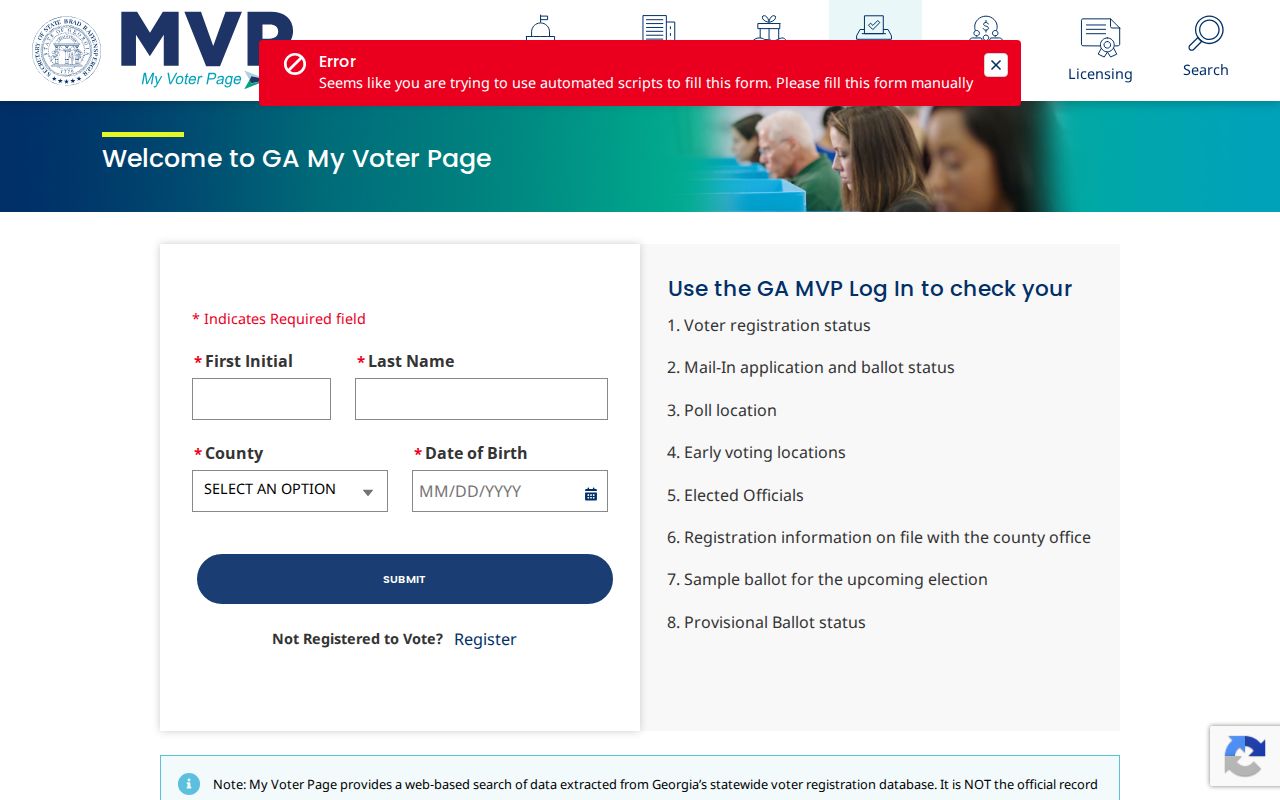
The state portal shows the authorized self-service route. Its required inputs cannot be bypassed to enumerate a whole block.
July 2024 prices tell another story. A Warner Robins municipal list cost $65, all of Houston County ran $70, and electronic delivery was estimated around two weeks. Status also needs care. An inactive entry is an administrative stage, not proof that a resident moved.
Warner Robins Court Clues
A court index can connect a name to a case number, filing date, court, party role, and docket events. It proves neither an address nor an allegation's truth. Start at the Georgia eAccess gateway and select the proper court. Ask the clerk for inspection or copies when needed.
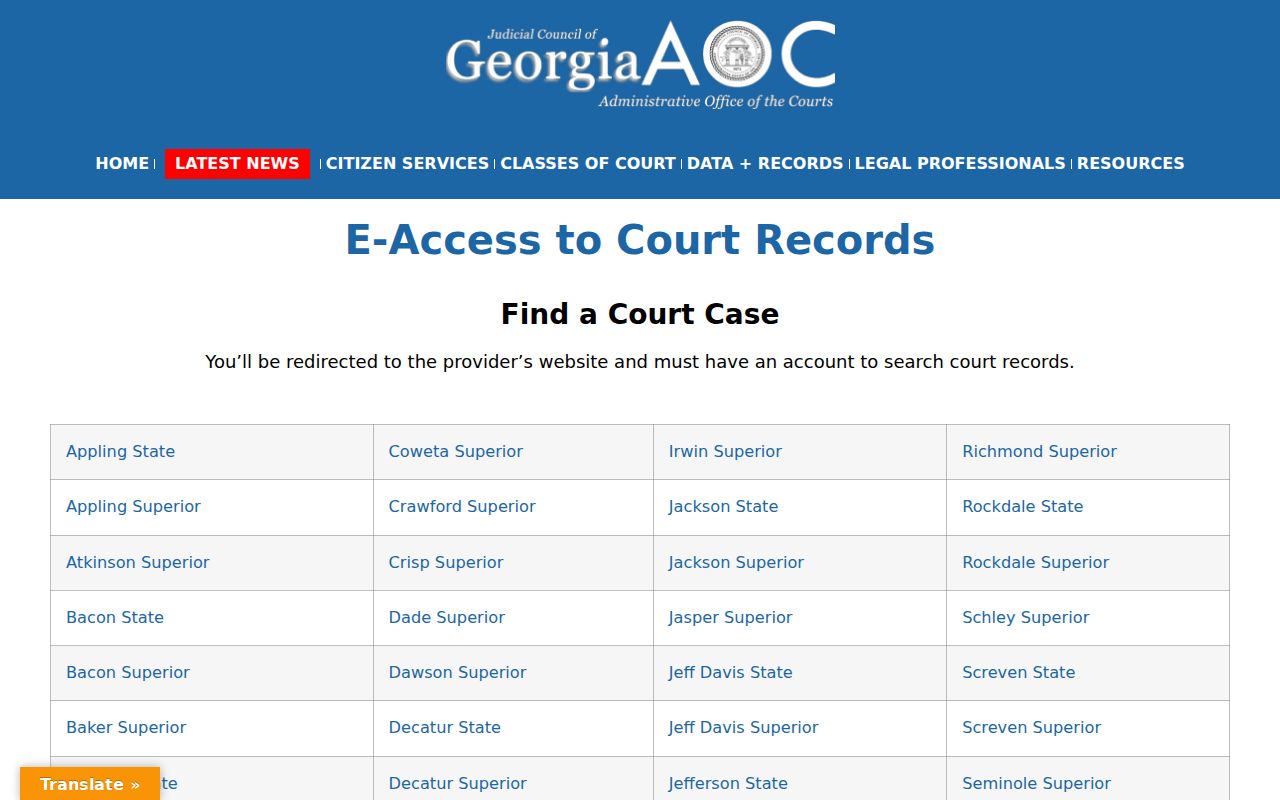
The state gateway routes searchers among separate court systems. There is no single statewide party database. Keep that structure in mind before you dig.
Houston County moved civil and criminal records for its Superior and State Courts into Benchmark on November 12, 2025. That date is a real search boundary. Anything filed after the migration lives in the Houston Benchmark search, shown below.
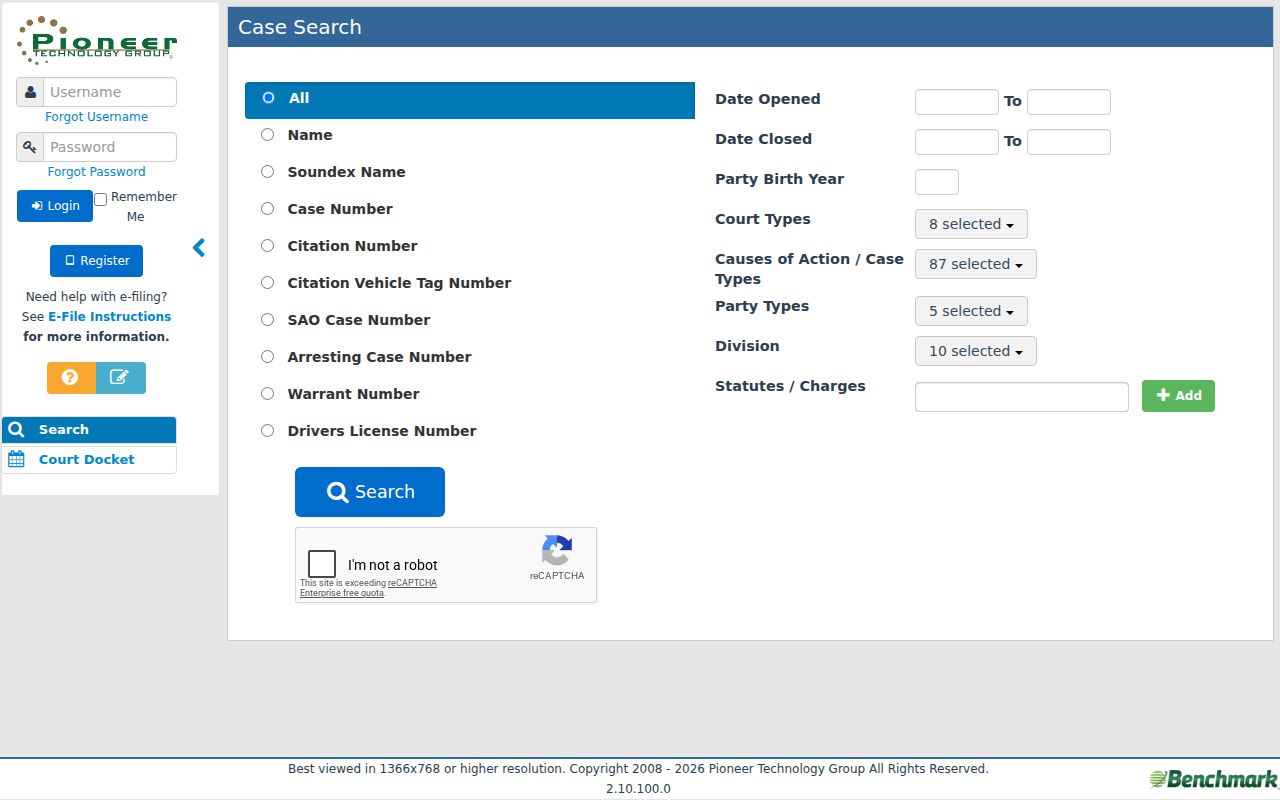
Remote access can fail. Call the clerk with the court and case number ready, or ask about a public terminal and an archive file.
Warner Robins City Requests
Permit histories, code matters, occupation-tax lists, annexation records, and road-name material may sit in city systems. Those systems have no public address index. Ask the right city department first. Then search or submit a focused request through Warner Robins NextRequest. Include the exact address, date span, department, and preferred electronic format.
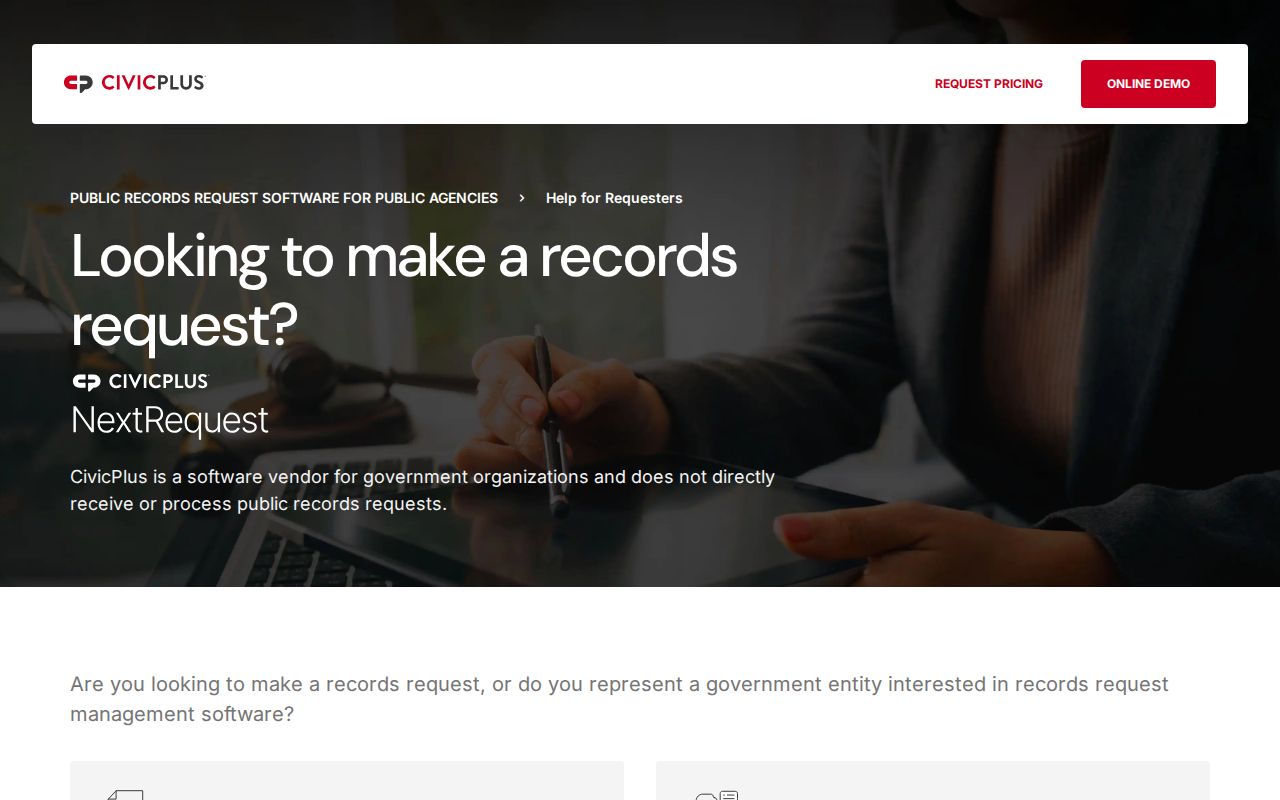
The portal lets you submit a request and search or browse what others have filed. The Open Records Act covers existing files only. That means no newly compiled house history. Under O.C.G.A. § 50-18-71, available responsive records are generally due within three business days, and if production runs longer the agency must describe the records and its timetable within that period.
Georgia Records Request Rules
Georgia's Open Records Act, O.C.G.A. §§ 50-18-70 through 50-18-77, opens with a presumption of access. A requester ordinarily need not live in Georgia. Purpose statements are optional too. Requests should target records that already exist. Protected details may be redacted, while any denial must name its legal exemption. The Attorney General's Open Government FAQ covers timing, fees, and enforcement.
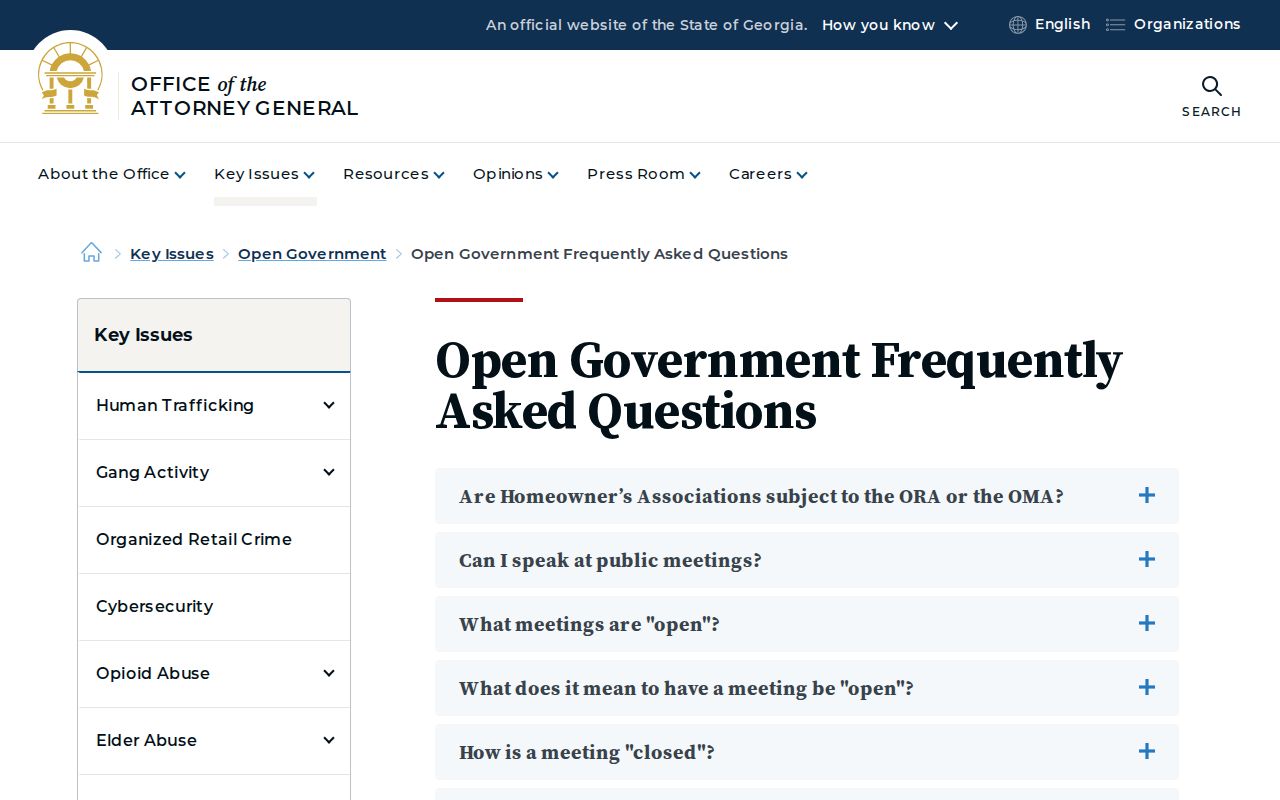
Send each request to the custodian who actually holds the records. Warner Robins cannot produce a Houston or Peach deed, parcel record, or county court file.
Warner Robins Vital Evidence
Vital records prove identity, events, and family ties. Yet recent certificates form no open residents directory. The Georgia Vital Records hub explains state and county access. State coverage starts in January 1919. Older records may require a county office or the Georgia Archives. Eligibility, identification, fees, and timing all depend on the record and how you order it.
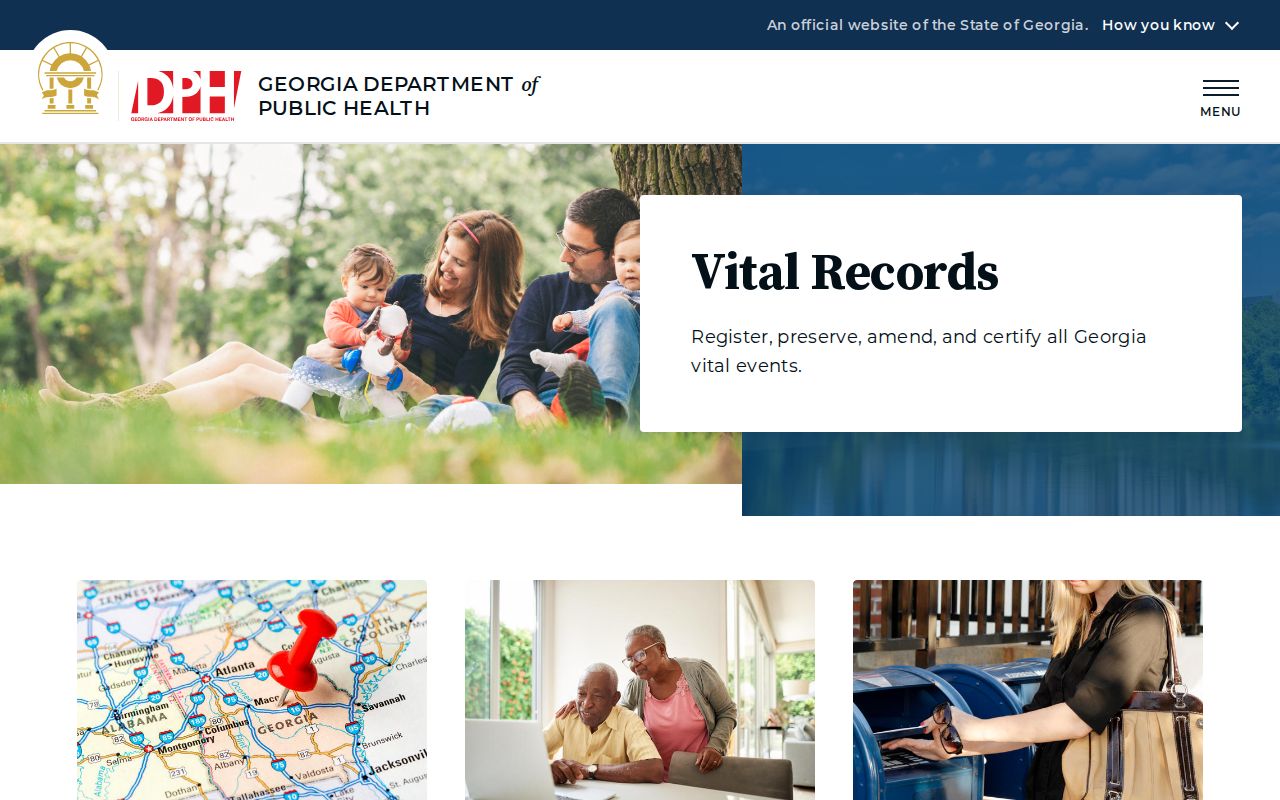
The DPH hub confirms current forms and eligibility before ordering. Andee's Law took effect July 1, 2025. It gives a Georgia-born adult age 18 or older a route to request a record. That record is an uncertified original pre-adoption birth certificate. DPH also lists routes for certain relatives of a deceased adoptee. This lawful family-history path does not open all contemporary birth files.
Warner Robins Record Terms
Label differences prevent mistakes: each record system uses terms tied to its own work, and none of them automatically means resident.
- Parcel
- A mapped unit of land with an assessor identifier.
- Situs address
- The parcel's physical location, distinct from the tax mailing address.
- Index
- A finding aid that may not include the full document image.
- Grantor and grantee
- The party conveying an interest and the party receiving it.
- Certified copy
- A custodian-issued copy formally authenticated as true.
A mailing address may belong to an owner elsewhere. A docket shows a filing, not its outcome. A book and page citation often leads to better identity evidence than a name alone.
Protecting Warner Robins Addresses
An official address is not always a home. Georgia Safe at Home, created through 2024 SB 324 and codified at O.C.G.A. § 50-18-150 et seq., substitutes a designated address for eligible participants. VoteSafe shields qualifying voter residence addresses. Covered officials may also have details removed from property websites under O.C.G.A. § 50-18-78. Never work around authentication, redaction, a substitute address, or a sealed record. Public rolls serve many lawful research aims. They never support stalking, harassment, threats, surveillance, or harm.
Lawful use only. A public record is not permission to contact, track, or intimidate the person named in it.
Historical Warner Robins Directories
Warner Robins grew around a wartime depot. It lacks an older seat's long directory run. Even so, the practical shelf is deep: the Nola Brantley Memorial Library, the Digital Library of Georgia, Georgia Historic Newspapers, the Georgia Archives, FamilySearch, census schedules, probate files, and base publications. Confirm exact printed-directory years with library staff. An old entry is a lead, not residence proof. It may show a name, spouse, occupation, and address. It can also omit people or reflect a move already made. Pair entries with census, deed, obituary, or probate files. The Warner Robins city directory page covers the collection method in depth.
York, Wellston, Warner Robins
Before 1943, the place name itself kept changing. Sources may say York, Wellston, Warner Robins town, or Warner Robins city. Others say rural Houston County. Some carry one of several wartime depot names. A vanished label does not mean a vanished family. Search catalog and newspaper variants instead. Rural routes, land lots, and First Street can anchor a search. The rail corridor can too. Each works better than a modern subdivision. Official history describes roughly 50 permanent residents at incorporation in March 1943. The 2020 census counted 80,308. A 2025 estimate puts the city at 87,761. That is a 9.2 percent rise from the estimates base. Growth, annexation, and base moves make each record's date essential.
Warner Robins Oral Histories
The Digital Library of Georgia Warner Robins Oral Histories keep resident memories alive. The interviews came out of Houston County Public Library and local heritage work. The city was remade between the 1940 and 1950 censuses. The interviews capture what a parcel index cannot: wartime moves, boarding arrangements, workplaces, family ties, and informal neighborhood names. Yearbooks and historic newspapers help too. They add classmates, events, and obituary clues.
Treat oral history as testimony, not an official roll. Check every name, date, address, and relationship against a deed, census, marriage, probate, or other dated source. Base collections include selected profiles. Yet workforce totals and consented stories do not add up to a public personnel directory.
The local story is tied tightly to Robins Air Force Base. Official Air Force accounts trace the depot rising from cotton fields. Its workforce shrank after World War II. It climbed again during the Berlin Airlift and early 1950s. Those swings explain short stays, newcomers from beyond Georgia, boarding households, and address changes across period sources. An aircraft or logistics occupation is useful context. Still, it does not prove the person still worked at the base or lived at the listed address.
Early Warner Robins sources need extra care, since institutions and publications operated under segregation. The preserved 1943 to 1944 depot records separate waiting rooms. That split is a reminder. One directory, school list, church record, or civic roster may not have described the full community. Keep the historical context intact. Search parallel institutions and newspapers, and resist turning an old classification into a modern claim about identity.
No printed directory for the year you need? Build a documented substitute chain. Combine an oral-history interview, a Georgia Historic Newspapers item, an official base publication, a marriage or probate file, and the nearest census schedule. The sources are not interchangeable. Their different dates and purposes reveal whether the same household, address, or family relationship holds up. Record the collection title and item date. That way another researcher can repeat the search.
Note: Search city names and period depot names when checking OCR text, catalogs, newspapers, and base publications.