
Warner Robins Directory Sources
No authoritative catalog found during the local research identifies a complete publisher-by-publisher run of Warner Robins city directories. That gap matters. A Macon directory, a county book, or a telephone volume should not be presented as a Warner Robins issue without seeing its title page. The reliable starting points are verified collections that can support or lead to a shelf search.
| Historical source | Verified span | Custodian | How to consult it |
|---|---|---|---|
| Warner Robins Heritage Society oral histories | Memories about 1890-1980 | Houston County Public Library and DLG | Free digital browse and streaming |
| Houston County marriage records | 1832-2015 | Houston Probate Court originals | FamilySearch name search; account may be needed |
| Georgia probate records | 1742-1990 statewide | Contributing probate courts | FamilySearch index and images; access varies |
| County records on microfilm | Mostly books begun before 1900 | Georgia Archives | Virtual Vault index, Archives, and FamilySearch |
| Federal census | Public through 1950 | National Archives | Partner databases and library genealogy service |
| Georgia city-history directory shelf | Exact local volumes unverified | Georgia Archives Reference Room | Catalog and staff shelf check |
The table separates known scope from open questions. Exact Warner Robins city directory years remain a shelf-check task. Start with the Houston County Public Library locations, then ask Georgia Archives Reference Services to check both Warner Robins and Wellston under its Georgia City History classification. Request title, year, publisher, and whether the volume has both an alphabetical list and a street guide.
Wellston Before Warner Robins
A prewar name search can fail even when the family never left the area. Houston County's history describes the Wellston whistle stop and cotton fields that became the wartime depot community. The town incorporated as Warner Robins in 1943. Catalogs may therefore file the same local story under York, Wellston, rural Houston County, Warner Robins town or city, and several depot-era names.
Test those headings separately. Around the change, also try Houston County and Macon-region telephone material because a publisher's coverage did not have to match the new municipal name at once. This is the central Warner Robins city directory quirk: the correct person and address can be hidden by a place-name change rather than a spelling error.
Catalog tip. Give library staff the target year and ask for Warner Robins, Wellston, Houston County, old phone books, reverse-address books, school annuals, and clipping files.
Warner Robins Archive Channels
The local route begins at Houston County Public Library. Its official resources connect researchers to the Digital Library of Georgia, Georgia Historic Newspapers, the Middle Georgia subset, ProQuest Newspapers, and the Warner Robins oral histories. A library card, PIN, or GALILEO password may be required for some newspaper access. Physical branches are also the best first place to ask about uncataloged telephone books, yearbooks, vertical files, and obituary references.
Check the Houston County Public Library locations before choosing a branch or asking staff to check local-history shelves.
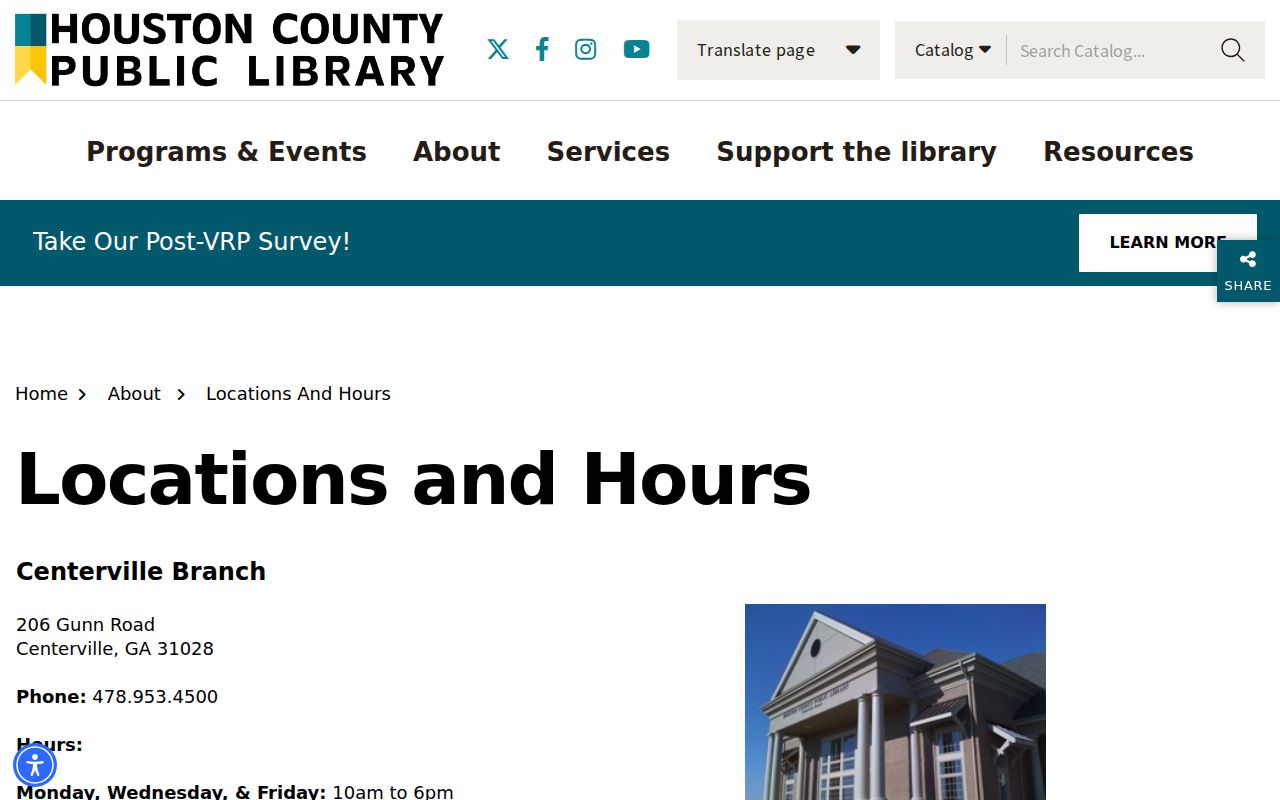
The branch listing supplies the local contact route for a shelf check when a directory or telephone book is not described in the public catalog.
The Georgia Archives adds city directories under classification F294, family files, Bible records, church and cemetery material, county indexes, and original records. Its county microfilm card index is an inventory, not a set of record images. Choose Houston County, read the first card for date or courthouse-disaster notes, and then identify the record group before requesting a reel or related image set.
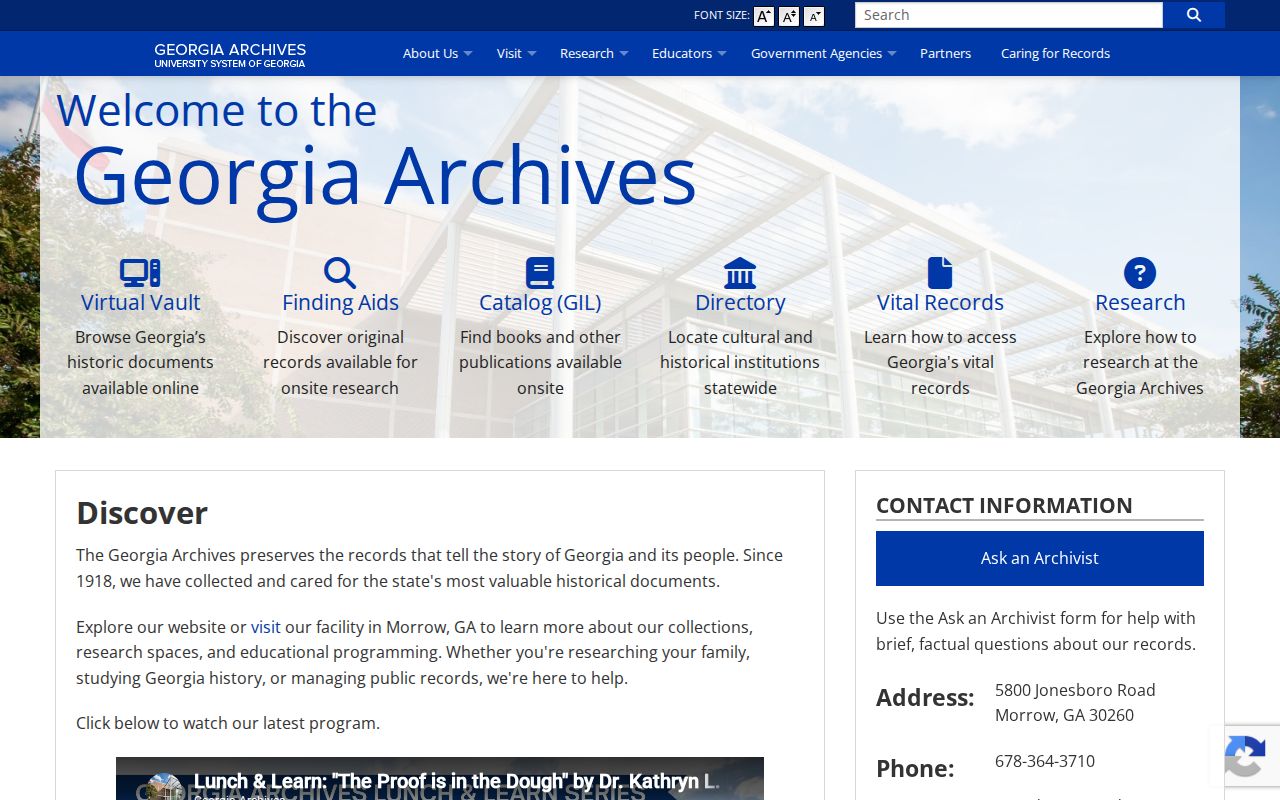
The Archives page is the starting point for reference help, catalog access, and planning an in-person visit rather than proof that a particular Warner Robins volume exists.
Use the Georgia Archives county-record cards to identify older Houston County microfilm groups before requesting a reel.
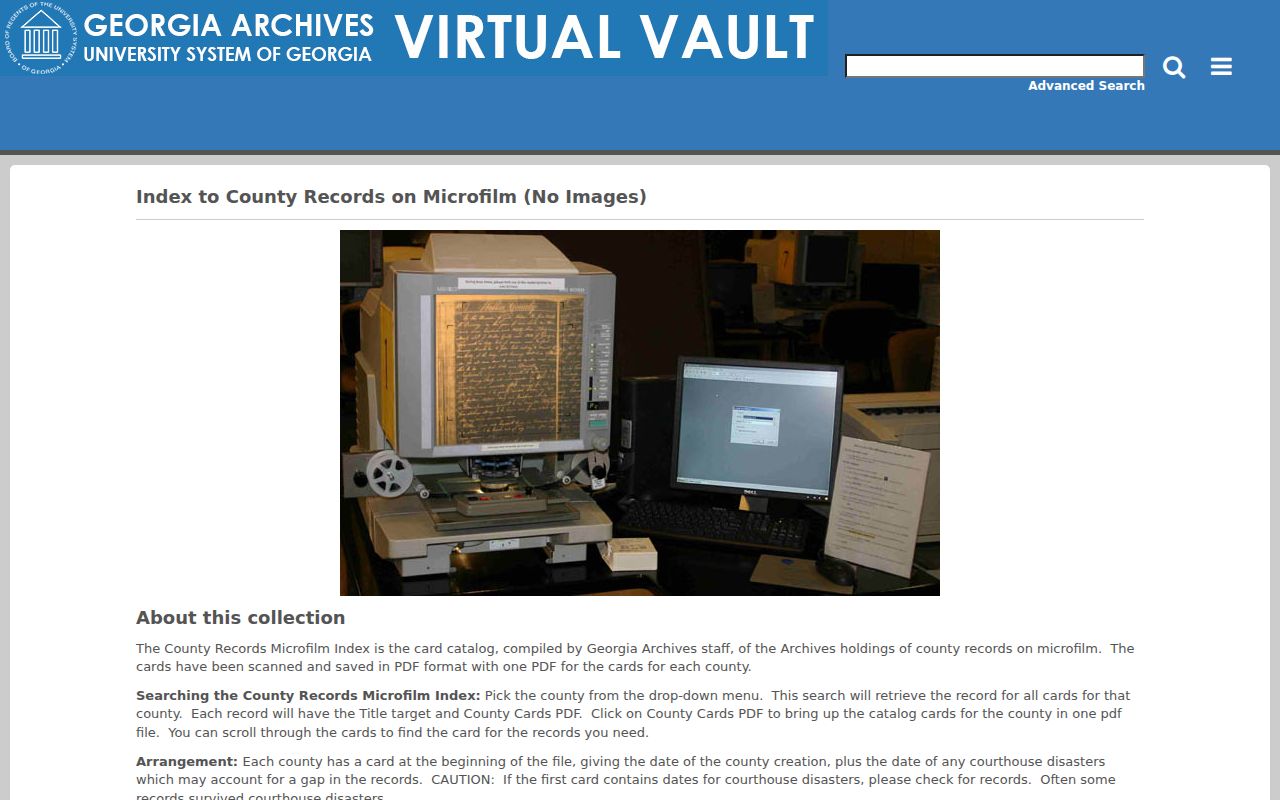
The card collection narrows the record group and date span, but researchers must still open the cited material to find a person or address.
The FamilySearch Houston County catalog is another bridge. It identifies deed, probate, marriage, and bond material, including a 128-page abstract of administrators' and guardians' bonds from 1852-1870. Digital images may require sign-in or access at an affiliate library.
These channels complement a city directory rather than replace one. Together they connect an abbreviated name and address to spouses, heirs, deeds, notices, and county-era records.
Warner Robins Oral History Directory
The Warner Robins Heritage Society Oral History Project is unusually useful for a city that expanded between census releases. Interviews cover resident memories spanning about 1890 through 1980. They can supply relatives, workplaces, churches, schools, informal neighborhood names, and variants that a printed index omits.
An interview is not a full resident roll. It records selected people's memories, and a remembered date or address still needs support from a dated source. Search the collection for a surname, base or depot term, school, congregation, road, and neighborhood label. Then compare the statement with a census schedule, deed, marriage record, newspaper notice, or confirmed city directory issue.
The collection is especially valuable for wartime moves and boarding arrangements. Those details can explain why one household appears briefly, why an address holds several unrelated adults, or why a family is absent from the expected alphabetical listing.
See the FamilySearch Houston County catalog before viewing the captured collection context below.
The catalog view demonstrates why source names, restrictions, and item descriptions should be recorded before relying on an image or index result.
Read Warner Robins Directory Entries
No open, authoritative scan of a Warner Robins residential entry was located. The field guide below comes from the Library of Congress description of directory practice and an official-library digitization of a 1960 R. L. Polk Georgia directory. It is a comparison tool, not proof that every local book used the same marks. Always copy the title page, publication year, publisher, symbol key, and abbreviation pages with the entry.
| Personal name | Surname, given name or initials exactly as printed; other adults may have separate entries. |
|---|---|
| Spouse or status | Spouse parentheses, marital shorthand, or a widow notation only if the volume defines it. |
| Work detail | Occupation, employer, or business address, often shortened by a local key. |
| Residence | House number, street, unit, boarding or residence marker as printed. |
| Phone and cross-reference | A number, alternate listing, or instruction to see another entry. |
| Ownership mark | An owner or renter symbol only when that issue's key defines one. |
Never expand an initial or symbol from memory. Check the street section for the same address because the alphabetical list and reverse order can differ after a move or canvass cutoff. A canvass is the publisher's effort to collect listings at a point in time, not a live registry.
- Criss-cross directory
- A later directory section arranged by street and house number instead of surname.
- Householder index
- A list focused on the named person associated with a household entry; its exact rule depends on the book.
- Abbreviation key
- The volume's own guide to shortened occupations, status marks, addresses, and cross-references.
- Canvass date
- The period when listings were gathered, which may precede the publication date and miss a recent move.
Warner Robins Census Pairing
The 1940 and 1950 census schedules add relationships, ages, birthplaces, and household members that city directories often reduce to a few adults. The contrast is important here. Warner Robins changed quickly during the depot years, while the next census release after 1950 remains closed until 2032 under the 72-year rule.
| Period | Local search heading | Best companion evidence |
|---|---|---|
| Before 1943 | Wellston or rural Houston County | 1940 census, deeds, tax digests, newspapers |
| 1943-1950 | Warner Robins plus older headings | 1950 census, depot records, oral histories |
| After 1950 | Warner Robins city and county context | Directories, newspapers, deeds, probate, oral histories |
Annexations and detachments can change the census place or taxing authority while a family stays on the same land. Preserve the address, route, land lot, and county along with the city label. That reduces false moves created only by changing boundaries.
Trace Warner Robins Directory Households
A city directory is most useful as one dated point in a chain. Work one issue at a time, and distinguish what the entry says from what another record confirms.
- Choose the place-name era. Search Wellston and rural Houston County before incorporation, and test both old and new headings near the change.
- Copy each adult, initial, spouse mark, work detail, phone, address, and cross-reference exactly from the alphabetical section.
- Turn to the street guide. Read nearby numbers, note other adults or businesses at the address, and watch for gaps that may signal a new building or renumbering.
- Move to the next earlier and later issue. Log the first and last appearance, each address change, and shifts in spouse or occupation.
- Pair the 1940 or 1950 census with nearby directory years, then confirm ownership through deeds and tax records.
- Bridge a changed surname or disappearance with marriage, probate, obituary, and newspaper evidence.
Disappearance does not prove death or departure. The household may have moved after the canvass, declined a listing, used a different spelling, or fallen outside the publisher's limits. Military turnover makes that caution vital in Warner Robins. A base-linked occupation or unit reference is a lead, not an open personnel file.
Bridge Warner Robins Directory Gaps
Marriage and probate sources can connect names that appear unrelated in a directory. The searchable Houston County marriage collection covers 1832-2015. Georgia probate material spans 1742-1990 statewide, though image and indexing coverage varies by county and book. Probate can identify a spouse, children, other heirs, witnesses, possessions, residence, and recording dates.
Historic newspapers add obituaries, wedding notices, military and base news, advertisements, legal notices, and address references. Search Warner Robins Sun, Daily Sun, Houston Home Journal, and Macon-area titles only where the database's title list confirms coverage. ProQuest access through the library can depend on local credentials.
Cemetery and church records are another route, but no official citywide interment database was verified. Use a cemetery named in an obituary to contact the cemetery, congregation, library, or Archives. This keeps the search tied to a known event instead of assuming every grave or register is indexed online.
Note: Exact Warner Robins publisher names and directory-year runs must remain unclaimed until a library or archives shelf check confirms the volumes.
Directory Bias in Warner Robins
The preserved 1943-1944 Warner Robins depot helps explain a deeper source problem. Its National Register documentation records separate waiting rooms for white and African American passengers. Local lists from that period were made within segregated systems, so researchers should expect unequal enumeration and separate institutions. Keep the original record context, but do not turn an outdated label into a modern identity claim.
The depot also anchors early downtown geography between First Street and the rail line. For families tied to the wartime buildout, search First Street, railroad and depot terms, older route descriptions, and county land references. The community grew from cotton fields and a rail stop into a large base city, which means many early residents may be easier to locate by land, work, church, or newspaper evidence than by a neat urban address.
A directory omission is therefore not a verdict. It can reflect the publisher's boundary, unequal canvassing, rapid growth, a rural route, military movement, or an unverified gap in the surviving shelf.