
Finding Warner Robins Residents
Begin with the kind of fact you need. Houston and Peach county assessor systems connect a parcel with its assessed owner, but that is ownership evidence, not a list of every occupant. Voter records concern registration. Court indexes show parties to filed cases, while deed indexes identify people and entities tied to land instruments. A former address may require deeds, probate, an obituary, a census year, or a historical directory. Each source has its own purpose and date.
A useful Warner Robins residents directory search moves from a broad name or address to an official identifier, then checks the result in an independent source. Middle initials, spouses, parcel numbers, case numbers, deed citations, and event dates can separate namesakes. Renters and other household members may never appear on a parcel card. Utility, motor vehicle, and delivery records are not public substitute directories.
- Use city boundaries or county GIS to decide whether the address lies in Houston or Peach County.
- Search that assessor by owner, address, or parcel and note the situs and deed reference.
- Check an authorized voter channel, court index, or business or license record for another dated fact.
- Follow the deed citation through the clerk or GSCCCA when ownership history matters.
- For an unposted city file, contact the department or make a narrow open-records request.
Warner Robins Crosses Counties
Warner Robins is incorporated in both Houston and Peach counties. Most developed areas are in Houston, yet a west-side parcel can fall in Peach. A Warner Robins mailing line does not settle jurisdiction. Check an official city-limits map or county GIS before choosing an assessor, deed clerk, tax office, or court. Keeping the parcel in the right county prevents false gaps and same-name mix-ups.
Houston courthouse functions are centered in Perry, with several services also at the Warner Robins Annex. Peach counters are in Fort Valley. City permits and council files remain with Warner Robins only when the site is inside incorporated limits. This two-county rule is the first check in any local directory search.
County first. Confirm the parcel county before interpreting an owner, deed, tax account, or court result.
Warner Robins Records Custodians
Georgia assigns deeds to the Clerk of Superior Court rather than a separately named recorder. Tax assessors maintain parcel and appraisal data. Elections offices handle registration records, while Warner Robins City Clerk Mandy Stella keeps city documents and legislative history. These offices are complementary. An assessor does not certify a deed, and City Hall does not hold county land files.
Houston Superior Court Clerk
201 N. Perry Parkway
Perry, GA 31069
478-218-4720
Real Estate Division
Houston Tax Assessors
201 Perry Parkway
Perry, GA 31069
478-218-4750
Houston qPublic
Peach Superior Court Clerk
205 W. Church Street
Fort Valley, GA 31030
478-825-5331 ext. 247
Real Estate Division
Warner Robins City Clerk
700 Watson Boulevard
Warner Robins, GA 31093
478-293-1000
City records
The City Clerk page shows the local routes pictured below. It separates agendas, licensing, tax, and open-records work from county functions.
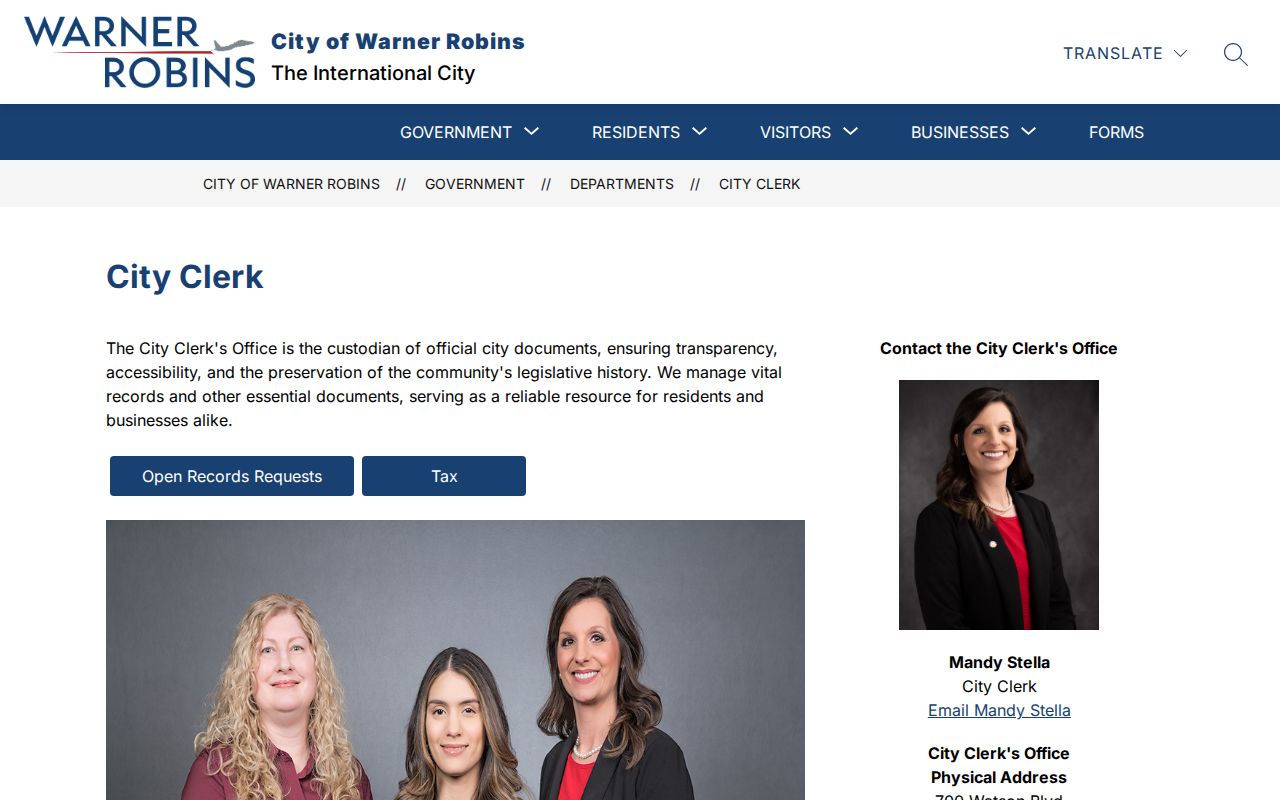
The office page starts a city-file search, not a universal resident roll.
Warner Robins Deed Index
The statewide GSCCCA Real Estate Index covers both counties. Search is based on parties rather than street addresses. Start with a current owner as grantee, open the acquisition deed, identify the grantor, and repeat with an earlier date range. Book and page, instrument number, legal description, land district, land lot, subdivision, and parcel references help hold the chain to one property.
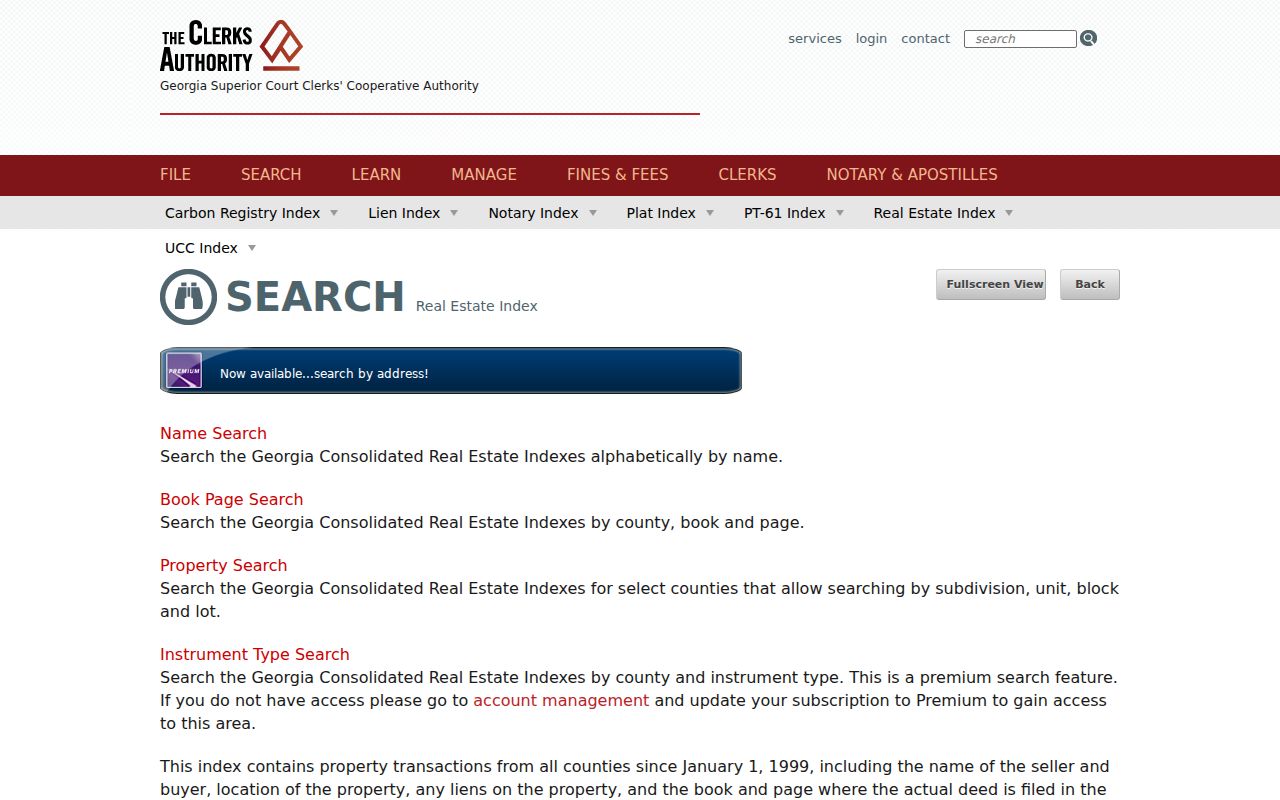
The gateway shows why county and party role must be selected before treating a name hit as the correct record.
| Search control | Use in a local deed search |
|---|---|
| County | Choose Houston or Peach |
| Name and party type | Test grantor and grantee roles |
| Instrument type | Limit the document category |
| Date range | Separate common names and periods |
| Book/page or number | Retrieve a cited instrument |
Images can depend on portal account terms. For old, unclear, or unindexed records, use the clerk counter. The Houston clerk page pictured here identifies the official copy route.
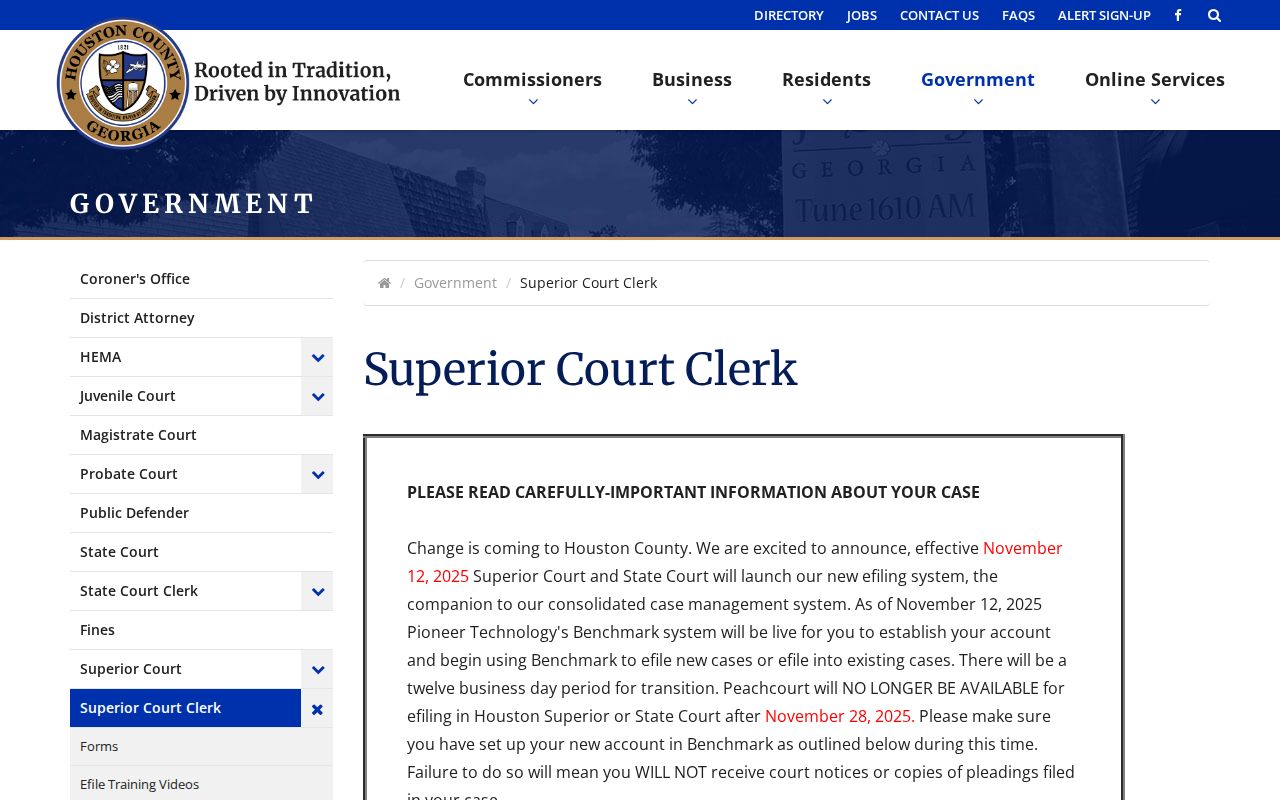
The clerk remains the authority for inspection and certified copies.
Current Warner Robins Directories
Official sources work like narrow resident directories, though none lists every household. Read each according to its purpose. A parcel roll identifies assessed ownership, an elector file concerns registration, a deed index records land parties, a case index records court parties, and a city staff directory gives public work contacts.
| Source | What it confirms | Keeper | Access |
|---|---|---|---|
| Property roll | Owner, situs, mailing and parcel facts | County assessor | qPublic and office |
| Elector records | Information allowed by Georgia law | SOS and county elections | Lookup or list order |
| Deed index | Grantors, grantees and citations | Superior Court Clerk | GSCCCA or counter |
| Court index | Party, case and docket events | Court clerk | Portal or office |
| City staff | Government work contact | Warner Robins | Free city directory |
Commercial compilations may blend old and new data without a clear source date. Official rolls are narrower but can be verified. A sound residents directory result combines two records created for different reasons and preserves both dates.
Warner Robins Voter Records
Georgia's My Voter Page is an individual confirmation tool, not a public street roster. It uses identity details to reach registration and polling information. Public elector lists are governed by O.C.G.A. § 21-2-225, exclude protected fields, and never disclose ballot choices. Commercial use of the elector list is a misdemeanor under O.C.G.A. § 21-2-601.
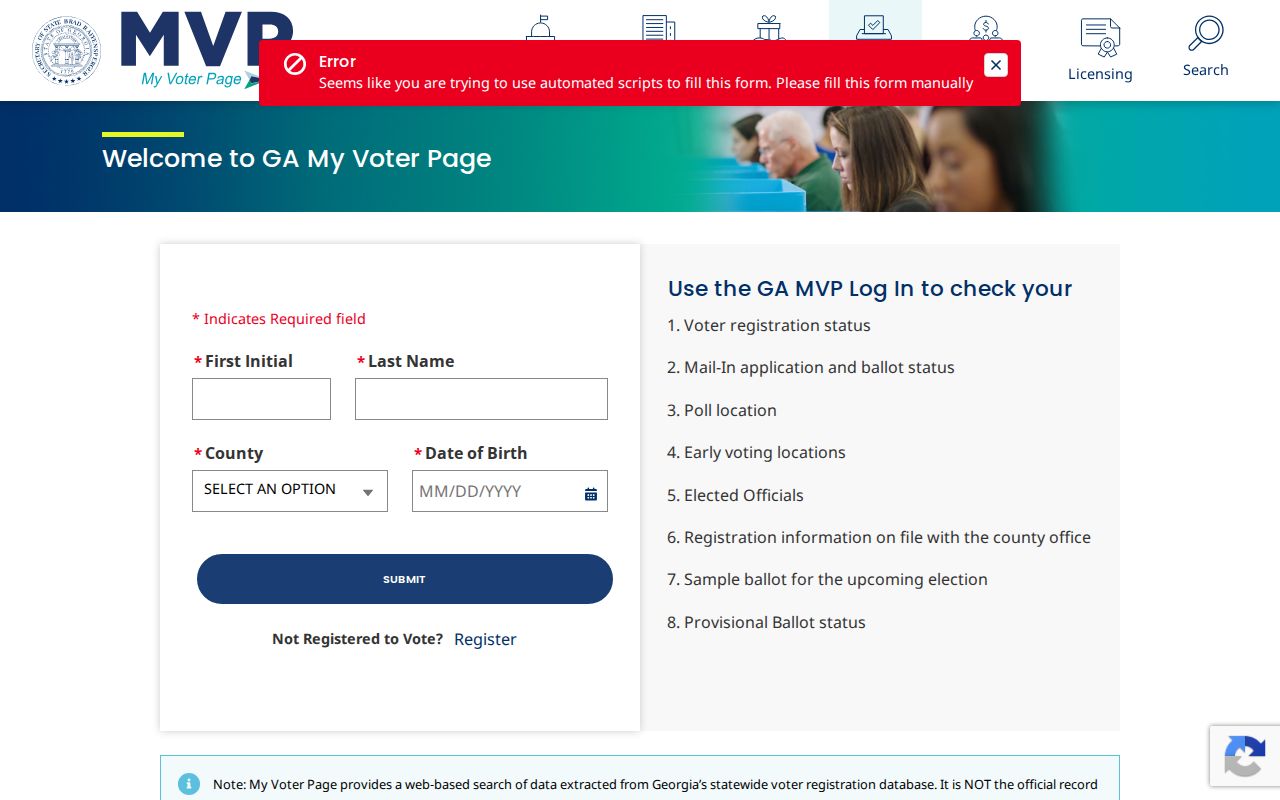
The state portal shows the authorized self-service route. Its required inputs must not be bypassed to enumerate a block.
The July 2024 schedule priced a Warner Robins municipal list at $65 and all Houston County at $70, with electronic delivery estimated around two weeks. Status also needs care. An inactive entry is an administrative stage, not proof that a resident moved.
Warner Robins Court Clues
A court index can connect a name with a case number, filing date, court, party role, and docket events. It does not prove a current home address or the truth of an allegation. Start at the Georgia eAccess gateway, select the proper court, and ask the clerk for inspection or copies when needed.
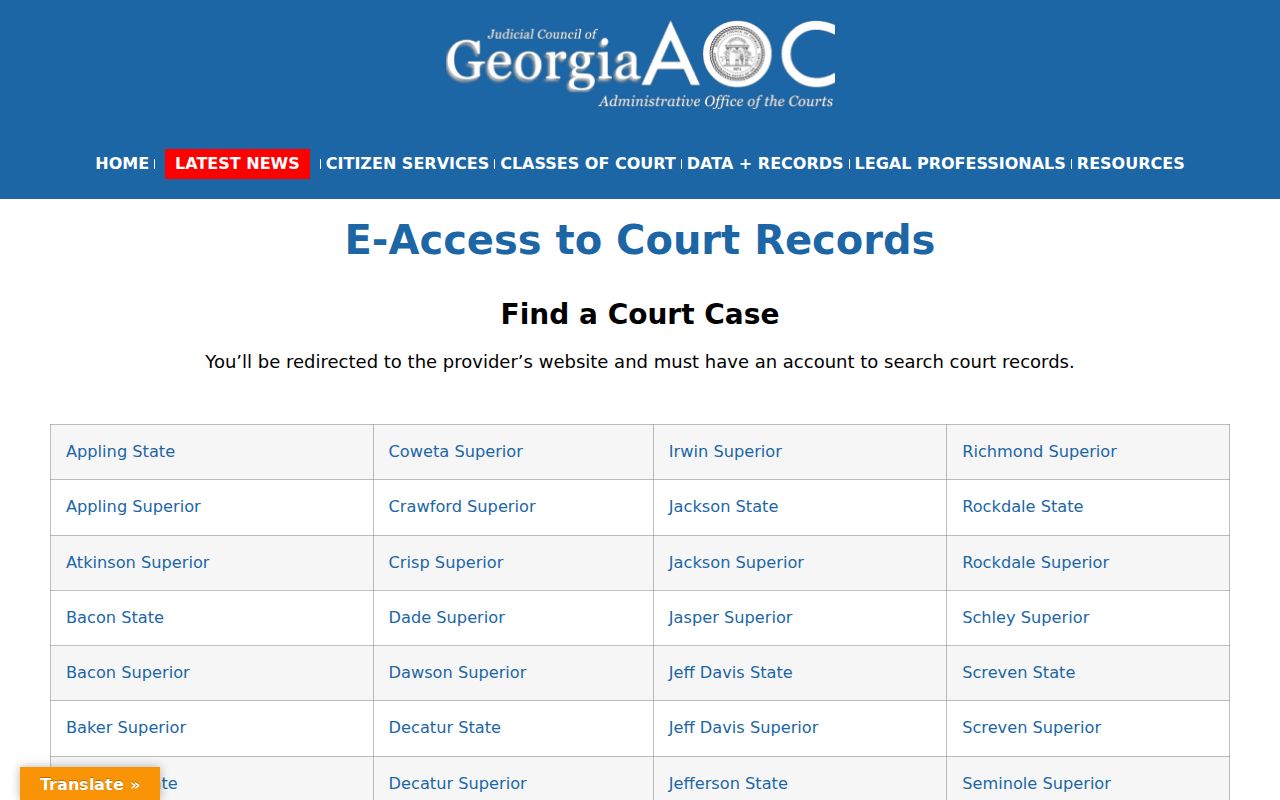
The gateway directs users among systems rather than offering one statewide party database.
Houston Superior and State Courts moved civil and criminal documents into Benchmark on November 12, 2025. That migration is a search boundary. The current Houston Benchmark search is pictured below.
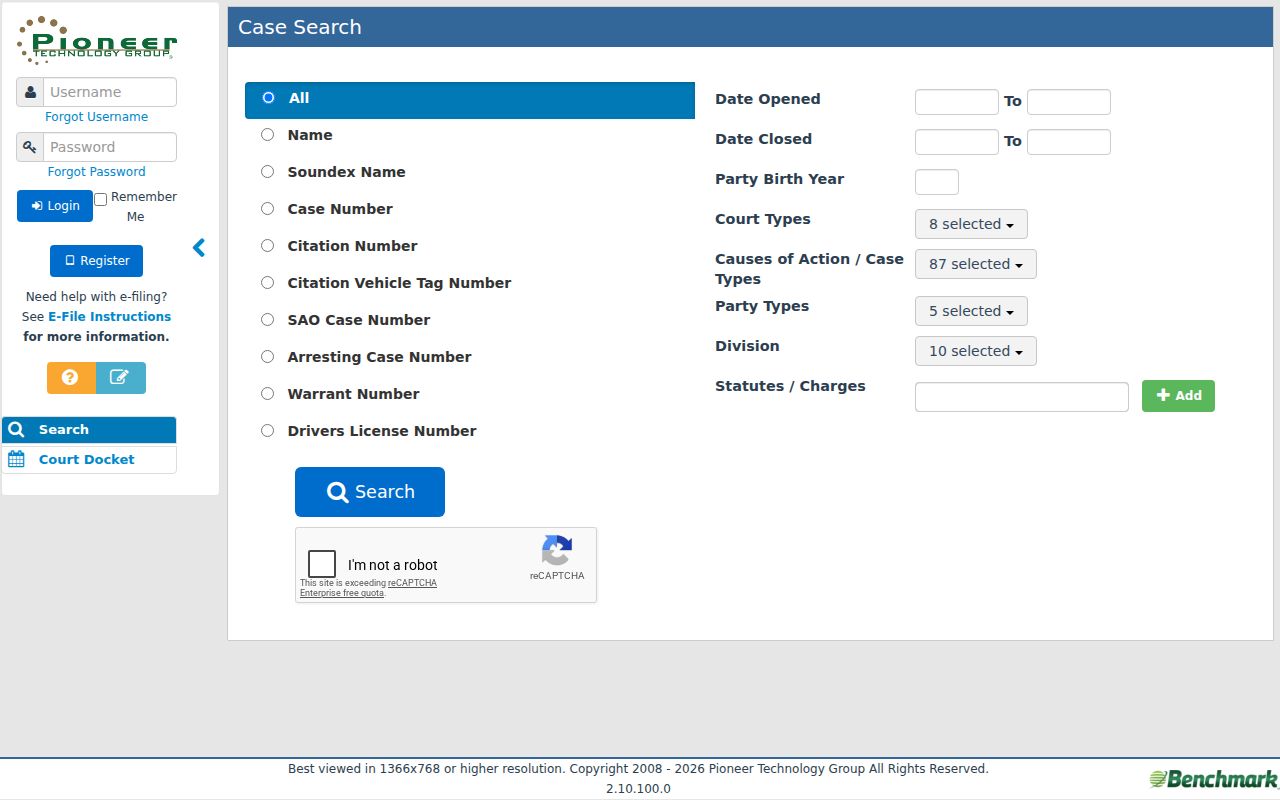
If remote access fails, call the clerk with the court and case number or ask about a public terminal and archive file.
Warner Robins City Requests
Permit histories, code matters, occupation-tax lists, annexation records, and road-name material may exist without a public address index. Check the relevant city department first. Then search or submit a focused request through Warner Robins NextRequest. Give the exact address, date span, department, and desired electronic format.
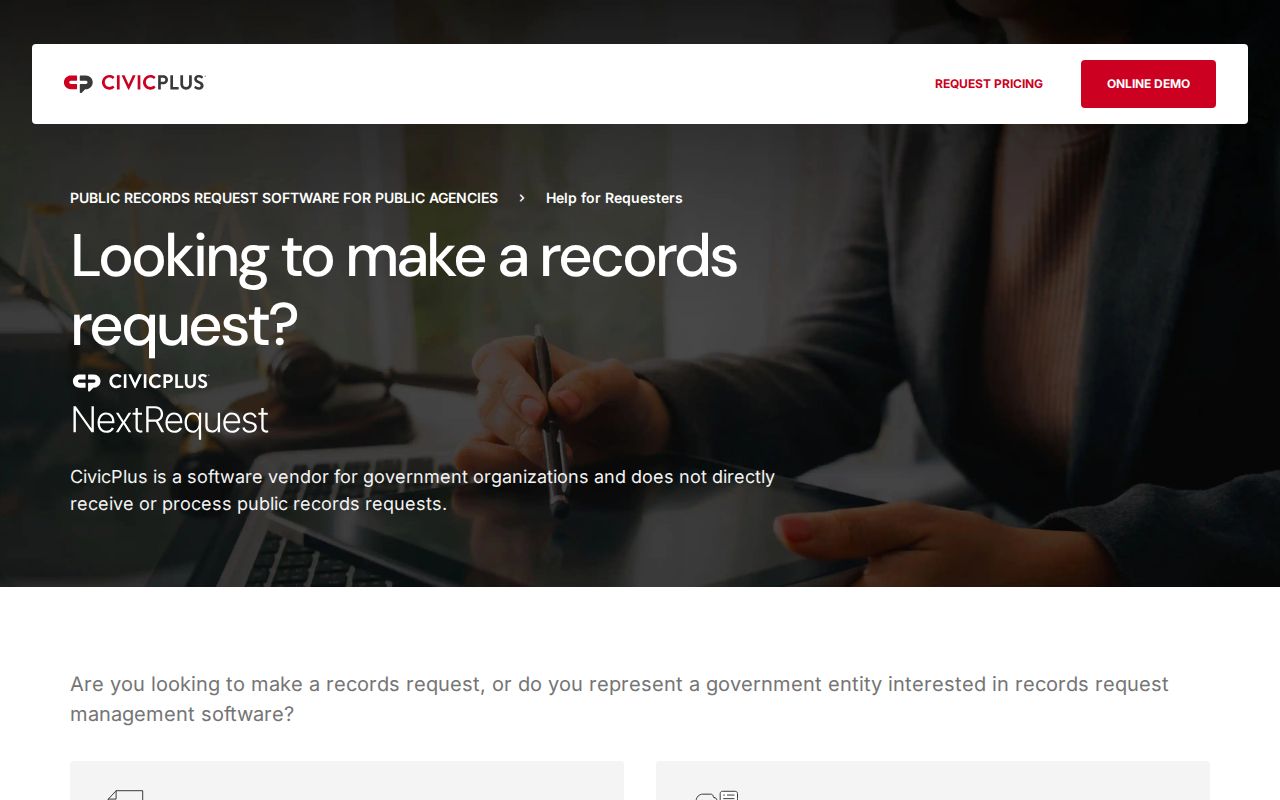
The portal supports request submission and searching or browsing published requests.
The Open Records Act requires existing files, not a newly compiled house history. Under O.C.G.A. § 50-18-71, available responsive records are generally due within three business days. If production takes longer, the agency must describe the records and timetable within that period.
Georgia Records Request Rules
The Georgia Open Records Act, O.C.G.A. §§ 50-18-70 through 50-18-77, begins with a presumption of access. A requester ordinarily need not live in Georgia or explain a purpose. Ask for existing records. Protected information may be redacted, and a denial must identify its legal exemption.
The Attorney General's Open Government FAQ explains timing, fees, and enforcement.
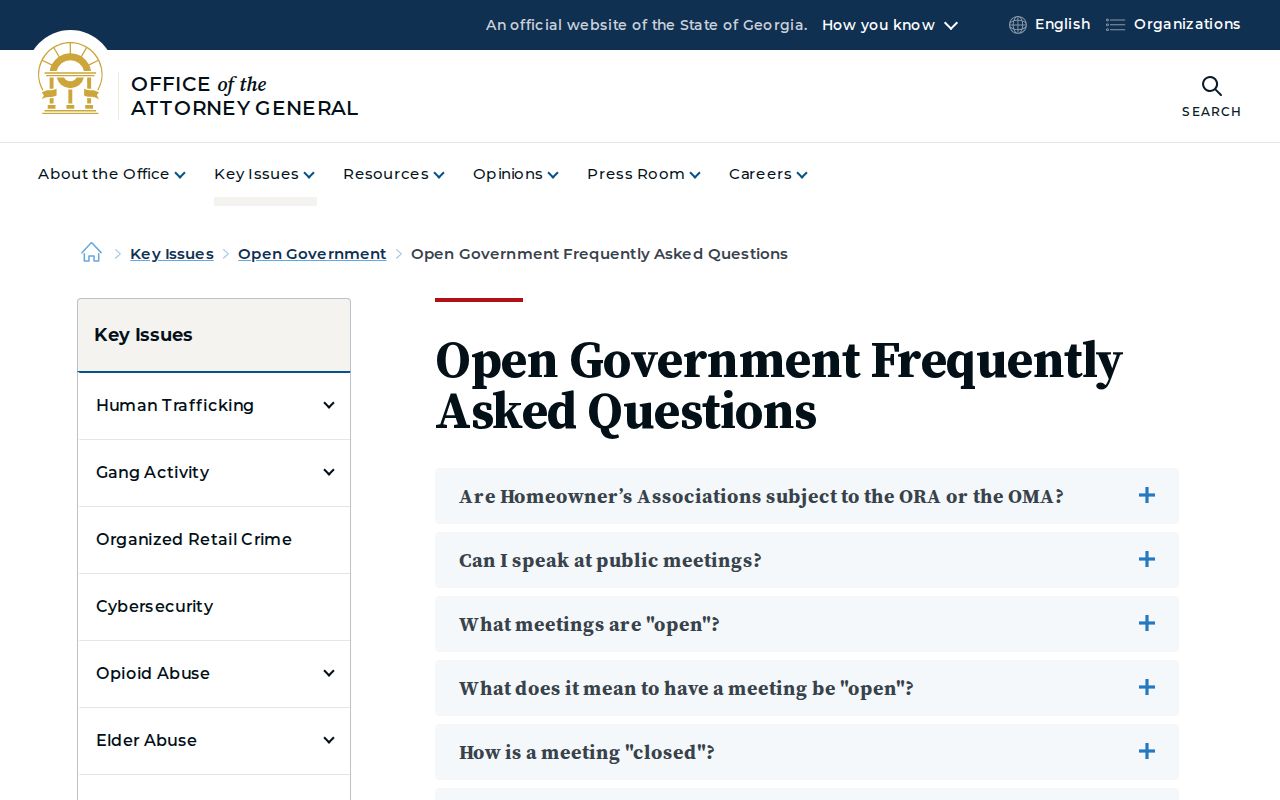
Send each request to the actual custodian. Warner Robins cannot produce a Houston or Peach deed, parcel record, or county court file.
Warner Robins Vital Evidence
Vital records establish identity, events, and family ties, but recent certificates are not an open residents directory. The Georgia Vital Records hub explains state and county access. State coverage begins in January 1919; older records may require a county office or the Georgia Archives. Eligibility, identification, fees, and timing depend on the record and order method.
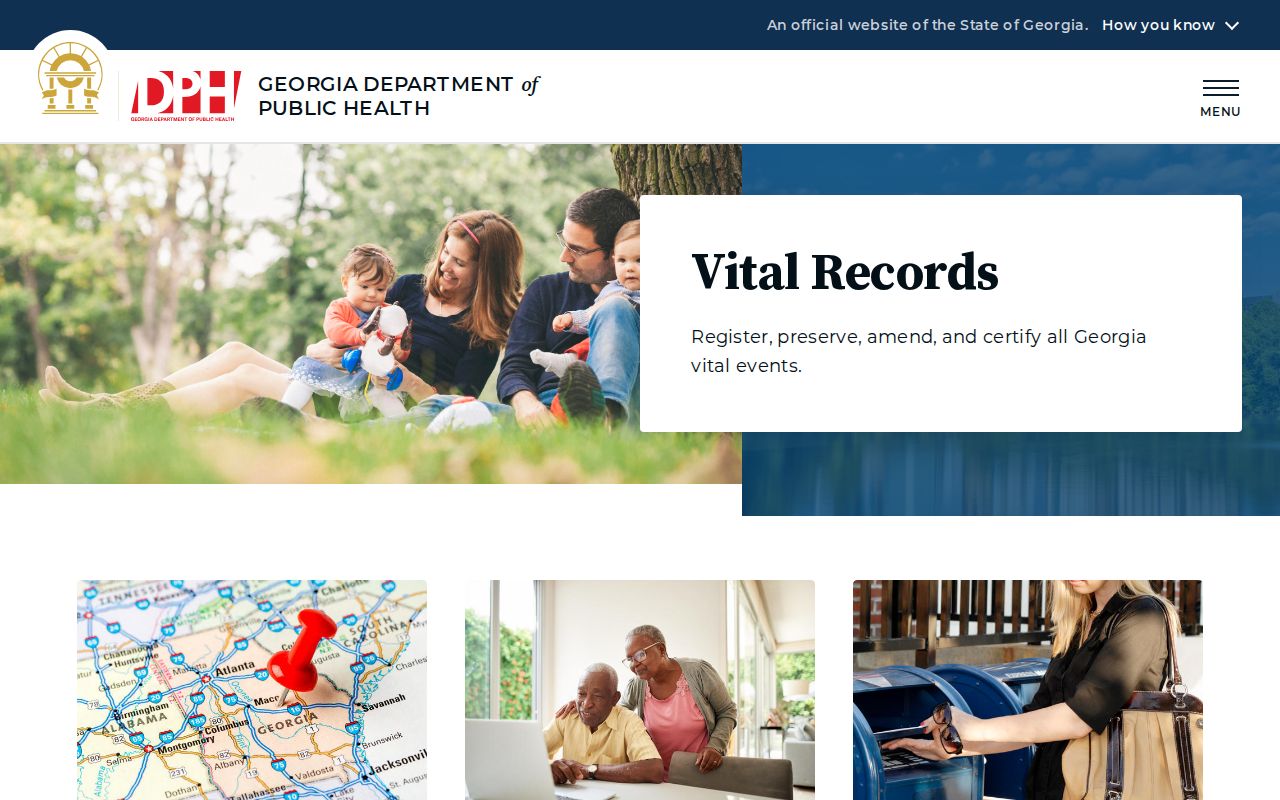
The DPH hub is the place to confirm current forms and eligibility before ordering.
On July 1, 2025, Andee's Law gave a Georgia-born adult age 18 or older a route to request an uncertified original pre-adoption birth certificate. DPH also lists routes for certain relatives of a deceased adoptee. This lawful family-history path does not open all contemporary birth files.
Warner Robins Record Terms
Label differences prevent mistakes. Record systems use terms tied to their own work, and none automatically means resident.
- Parcel
- A mapped unit of land with an assessor identifier.
- Situs address
- The parcel's physical location, distinct from the tax mailing address.
- Index
- A finding aid that may not include the full document image.
- Grantor and grantee
- The party conveying an interest and the party receiving it.
- Certified copy
- A custodian-issued copy formally authenticated as true.
A mailing address may belong to an owner elsewhere. A docket can show a filing but not its final outcome. A book and page citation often leads to better identity evidence than a name alone.
Protecting Warner Robins Addresses
Not every address in an official system is a residence. Georgia Safe at Home, created through 2024 SB 324 and codified at O.C.G.A. § 50-18-150 et seq., substitutes a designated address for eligible participants. VoteSafe protects qualifying voter residence addresses. Covered officials may also have details removed from property websites under O.C.G.A. § 50-18-78.
Never work around authentication, redaction, a substitute address, or a sealed record. Public rolls support lawful family, property, genealogy, civic, and safety research, but never stalking, harassment, threats, surveillance, or harm.
Lawful use only. A public record is not permission to contact, track, or intimidate the person named in it.
Historical Warner Robins Directories
Warner Robins grew around a wartime depot, so its trail differs from an older county seat with a long annual directory run. The Nola Brantley Memorial Library, Digital Library of Georgia, Georgia Historic Newspapers, Georgia Archives, FamilySearch, census schedules, probate files, and base publications form the practical shelf. Exact printed-directory years were not verified online and should be confirmed with library staff.
An old city directory entry is a dated lead, not current residence proof. It may show a name, spouse, occupation, and address while omitting people or reflecting a move. Pair it with a census, deed, obituary, or probate file. The Warner Robins city directory page covers the collection method in depth.
York, Wellston, Warner Robins
A pre-1943 search can fail because the place name changed. Sources may use York, Wellston, Warner Robins town, Warner Robins city, rural Houston County, or one of several wartime depot names. Search catalog and newspaper variants instead of assuming a person left when one label vanishes. Rural routes, land lots, First Street, and the rail corridor can be stronger historical anchors than a modern subdivision.
Official history describes roughly 50 permanent residents at incorporation in March 1943. Census figures show 80,308 residents in 2020 and an estimated 87,761 in 2025, a 9.2 percent rise from the estimates base. Growth, annexation, and base-linked moves make the date on each directory record essential.
Warner Robins Oral Histories
Digital Library of Georgia Warner Robins Oral Histories preserve resident memories collected through Houston County Public Library and local heritage work. For a city transformed between the 1940 and 1950 censuses, interviews can supply wartime moves, boarding arrangements, workplaces, family ties, and informal neighborhood names absent from a parcel index. Yearbooks and historic newspapers add classmates, events, and obituary clues.
Oral history is testimony, not a complete official roll. Compare each name, date, address, and relationship with a deed, census, marriage, probate, or other dated source. Base histories also contain selected profiles, but workforce totals and consented stories do not create a public personnel directory.
The local history is unusually tied to Robins Air Force Base. Official Air Force accounts describe the depot rising from cotton fields, with the workforce falling after World War II and growing again during the Berlin Airlift and early 1950s. Those shifts help explain short stays, newcomers from beyond Georgia, boarding households, and address changes in period sources. An occupation tied to aircraft or logistics is useful context, but it does not prove that the person still worked at the base or lived at the listed address.
Early Warner Robins sources also require care because institutions and publications operated during segregation. The preserved 1943 to 1944 depot records separate waiting rooms, a reminder that one directory, school list, church record, or civic roster may not have described the full community. Keep the original historical context, search parallel institutions and newspapers, and avoid turning an old classification into a modern claim about identity.
When no printed directory covers the needed year, use a documented substitute chain: an oral-history interview, a Georgia Historic Newspapers item, an official base publication, a marriage or probate file, and the nearest census schedule. These sources are not interchangeable, but their different dates and purposes can show whether the same household, address, or family relationship persists. Record the collection title and item date so another researcher can repeat the search.
Note: Search city names and period depot names when checking OCR text, catalogs, newspapers, and base publications.